Showing posts with label relationships. Show all posts

People Over Projects


Hey y'all! You may or may not have noticed that I missed out on posting last week. Working in the car selling business means LONG hours this time of year and I was stretched so thin that I was pretty much translucent! It was just one of those weeks that I can't say I am particularly proud of how I balanced everything, or should I say my lack of balancing everything! But, I did learn something from it, and that is what I am going to share with you today!

So, I am completely and totally one of those people who HAS to stay busy! I love to learn new things and be a part of anything I feel is worthwhile. I am a “project” kind of girl. I set goals for myself every year of new things I want to learn to do and I pick up new hobbies in between; needless to say, there is always something going on in my world. I think that most people would get very lost in the maze that is inside my head. Really, it is a”maze”ing! (bad joke, I know, I couldn't help it!) Well, anyway, last year I learned to knit,the year before I took on refinishing furniture and this year I plan to learn to quilt. I am sure there will be more on that later. But my point is, I tend to load my plate as though I am at an all you can eat buffet and my eyes are most definitely bigger than my belly! Some days this just makes me feel so defeated that I actually break down in tears. I want to be able to do everything and do it well and it just isn't possible. Something is ALWAYS forced to the back burner. And more often than not it is people. The sad reality tied to that is, in the end, people are all that matter.

The only thing I can figure is that, whether conscientiously or sub-conscientiously, we push people out of the way because people will understand. Your best friend understands if you can't do lunch because you just absolutely have to get caught up on laundry. Your husband understands if you work late and he has to eat dinner alone. Your kids understand if you can't take them to the park because there just isn't enough time. But, I am here to tell you. MAKE TIME. At the end of the day, there is NOTHING more important than those relationships. You are who you are because of these people and the person that you will be in ten years will be a direct result of the choices you make now.

Like I said earlier, last week was HARD for me. I spent nearly every night working late and I spent no time at all on my relationships. The most communication I had were a few measly text messages in moments I stole throughout my day. I didn't cook dinner, I didn't get to learn about his day, nor he mine. And I missed him. The man I live with was there and I wasn't. And so here I was, February 13th late at night and I still have nothing planned for Valentine's Day which was a few short hours away. I had been thinking all day about what I could buy as a gift, or something I could plan, with very limited time and resources (I live in a small town and they roll up the streets about 9pm, even on a Saturday.) and I was drawing a blank. I had finally decided that at the very least, I needed to buy a card. So, I went to my local conveniently located Family Dollar Store and bought a card and a few other little things to add to a basket of goodies. While I was in there I decided to head to the video store and rent a movie, yes, we still have a video store and it is AMAZING! Then, like a brick wall, it hit me! What I really needed to do was give my time. This loving man that chose me to spend his life with deserves my attention. He deserves my UNDIVIDED attention!

So, instead of facing the mounds of laundry and pile of dirty dishes and all the other things that I “needed” to take care of on my day off, I suggested that we get in the car and just drive. See where we end up, visit a town we have never been to and just enjoy being together. This is honestly one of our favorite things to do and we don't take the time to do it near enough. We landed in a small town and ate at a little restaurant called Barrelhouse Pizza (FANTASTIC by the way) and it was honestly one of the best days I have had in a long time! No chaos, no interruptions. Just me and him.


This week I have still had to work late, but I have taken the time to focus on more than how tired I am and the million things on my to do list when I get home at night. I have invested my time and attention into people more than all my projects and I am NOT sorry for that.  


Facebook Is Free For Everyone, But Your Personal Page Is Your Right And Everyone Else’s Privilege.

Someday, I’m going to be able to tell my grandchildren that I was using Facebook when it was still exclusive to college students.

That girl who sat next to you on the first day of classes—can we say study buddy or future BFF? Friend her! That cute guy across the classroom? Friend him! (It’s not weird! After all, we’re in the same class and I only friended him so I could ask about assignments...aaaand hoped he might see that I’m cute and fun, too!) Smart guy or gal in the class? Friend ‘em! They might prove helpful later. Funny guy or gal in class? Friend ‘em! I could use daily humor to break up the monotony of my long, studious days.

Facebook was great in the beginning, because it was limited to college students. It was a fantastic way to connect with people in your classes; to share assignment information; to commiserate on deadlines and all-nighters; to get plugged into social collegiate activities. I remember Facebook feeling “cool” back then because—not only was it was exclusive—there was absolutely zero drama. It was just a bunch of twenty-somethings finding virtual companionship as they stumbled through four-plus years of sleepless, caffeine-fueled nights, cramming more information into their already full-to-bursting brains.

But alas, all good things must come to an end, and in September 2006, anyone aged 13 and up with a valid email address could create a Facebook page.

Don’t ask me why—I couldn’t tell you even if you did—but I vividly remember getting online that day to see this significant change in Facebook’s policies. This was great for Facebook because it was growth; an indicator of its immense success as a forerunner of social media (and let’s face it, if Facebook hadn’t done it, somebody else would have). But the second I realized anyone—family and old friends—could join, Facebook’s mystique began to fade.

It killed Facebook’s professional atmosphere and began feeling like an overcrowded party with every person you’ve ever met in your entire life. That girl who spread rumors about you in high school sent you a friend request; you could either ignore it, risking her posting passive-aggressive statuses like, “Once a b*tch, always a b*tch” that someone would later screenshot and send to you, or you could accept her request just to keep from causing a petty, unnecessary conflict. Getting friend requests from cute guys in your classes was exciting because it meant he’d noticed you, but it became creepy when guys you said, “Excuse me,” to in the grocery store started sending you friend requests. Having parents, aunts, uncles and grandparents call you up over some gossip they heard about you is endurable, but now you’re getting angry messages with screenshots of a facetious remark or photo you shared. Or, you have relatives firing back with passive-aggressive statuses that are just vague enough so that when you ask them about it, they can slyly say, “Oh, it wasn’t about you.” Meanwhile, they’re getting self-satisfaction out of the fact that it was about you and that you saw it. You’re getting into heated discourses with the weird kid in high school you had absolutely nothing in common with even back then; neither of you care about the other’s opinions or feelings, you’re just battling it out with no other purpose in mind but to out “Gotcha!” the other.

We’re all guilty of one or all of these. Facebook has enabled us to become both the bully and the victim of misinterpretations. Like most of you, I’m a nice person. I try to do what’s right, both morally and legally. But I once had a serious wake-up call with just how unhealthy Facebook had become. I posted a status a few years ago—a political status posted while I was angry—that I came to regret. Not because I was necessarily wrong in how I felt, but looking back, it was inflammatory and resulted in a bombardment of angry comments that I wasn’t expecting. This infuriated me further because two of the people who attacked me over it had FOR YEARS made posts insulting to my faith. They were unrelentingly critical of people with my political leanings, and not once had I invaded their personal pages to tell them why I thought they were wrong. But here they were, attacking me on my own page. Another guy posted a “Gotcha!” comment on my post before promptly unfriending me for my opinion. I’ll never forget what I thought when I saw he’d actually unfriended me: “Who was that guy?”

And that was when I knew Facebook—for me—had gotten out of hand.

It had gotten to the point where I dreaded getting on Facebook because all it did was make me angry. I’d friended/accepted friend requests from people I’d gone to daycare with—elementary, middle and high school with. I had friended friends of friends, people I knew only because one of my real friends had mentioned their name in a conversation once. I realized I had two choices: Leave Facebook, or create an online environment that would allow me to flourish while keeping me accountable for my words.

So, I cleaned house.

I went from 600+ friends to 80. I got rid of people I’d never actually been friends with in real life. I got rid of people I found too closed-minded and unapologetically provoking; this applied to both people with beliefs similar to mine, and people with beliefs in opposition of mine. I got rid of people who offered nothing of substance but passive-aggressive drama. I even got rid of people I actually liked simply because I hadn’t seen or spoken to them in real life for years. As a result, Facebook became a place of positivity and growth for me. I didn’t just keep Facebook friends who thought like me so I could keep myself in a safe, little bubble. No. The majority of people (there are a few exceptions) I kept as friends met the criteria below:

1: They are kind.

2: I can learn something from them.

3: We have good conversations often.

4: We are close and they have a knowledge of the real me, or at least, they did at one time.

Facebook is free for everyone, but your personal page is your right and everyone else’s privilege.

Let me rephrase this so it’s understood from both perspectives: It’s not your right to be “friended” by someone on Facebook; it’s a privilege extended to you by that person, allowing you a window into their life. I don’t care if it’s a stranger on the street (though I do hope you aren’t friending strangers...) or a relative; if they are not kind, if they are not contributing anything of substance to your life, if they abuse the privilege of being your friend on Facebook, UNFRIEND THEM. Some people will handle this better than others, but there’s something rather taboo about unfriending someone. That’s because we live in a selfish, entitled society and most people believe just because they exist, you should tolerate them. While everyone has a right to exist, you DO NOT have to tolerate them, especially when they’re abusing the privilege of being allowed a peek into your life.

WHAT DOES AN ABUSED PRIVILEGE LOOK LIKE?

I’m glad you asked. Someone who abuses the privilege of being your Facebook friend is someone who polices your posts, scolding you (whether outright or out of a self-righteous attempt to correct you). It’s someone who sends you screenshots of your own genuinely innocent posts, asking you to explain them. It’s someone who often—or even just sometimes—posts passive-aggressive statuses about you, knowing you’ll see it. It’s someone who uses your posts as fodder for gossip or to wreak havoc in your friendships or relationships. These types of people unequivocally DO NOT DESERVE access to your life through Facebook, and you do not deserve the emotional turmoil they inflict on you. Unfriend them. I know I sound ruthless (and if you ask anyone who knows me, they’ll tell you I’m anything but), but I think it’s because—paradoxically—I stopped taking Facebook so personally. I don’t take offense when someone unfriends me (whether I agree with the reasons they do it or not) because that’s their right. After my massive Facebook purge, you better believe I had a few people confront me face to face (or in private messages I didn’t see because private messages are hidden from me due to my privacy settings). I told them the truth: “I was miserable on Facebook and decided to make it a little more private. No offense. Sorry.” What could they do? Send me another request and force my finger to hit the “Accept” button?

I’ve also had to explain to abusers of the privilege of being my Facebook friend why they were unfriended:

“Because you caused problems in my other relationships.”

“Because you want to passive-aggressively insult me or correct me without talking to me about what it is that upset you.”

“Because it’s causing too many problems between us.”

Unfriending someone doesn’t have to be permanent; having the privilege of being someone’s Facebook friend can be earned back—as long as you prove you can be a real friend in real life. Because being Facebook friends doesn’t have to be permanent, either.

The complete loss or deterioration of friendships used to be normal. It used to be a sign of growing up. Facebook—though it’s not necessarily a bad thing in the right hands—has altered this fact of life. It’s great to see how old friends are doing, and being able to keep in touch with relatives across the country every single day, but in order for Facebook not to become a burden, we still must have boundaries. Unfriending someone—when done for the right reasons—isn’t about disrespecting the other person; it’s about having respect for yourself. It’s about demanding respect from someone who gives you none, and when they repeatedly encroach on your emotional, physical or mental wellbeing, there needs to be consequences.


Your page is your right and no one else’s, the same as your life. And anyone who makes you feel guilty for standing up for yourself shouldn’t be allowed on your page, anyway. If there’s only one thing you walk away with after reading this article, I hope it’s that. 


Why Knowing Your Myers-Briggs Type Can Make You A Happier Person


Have you ever met someone who, though you both may be good people, it just feels like you’re eternally on different wavelengths? Have you ever been accused of being too sensitive, or too hyper, or too daydreamy, or too commanding, as if these were inadequate qualities to have? Have you ever felt different from everyone else in a way you couldn’t explain? Have you ever felt like no matter what you do, your motives or your train of thought are misunderstood? Have you ever cared too much on the inside? Have you ever not shown that you care enough from the outside?

Regardless of how you answered the above, I know how you feel. For most of my childhood, I felt completely misunderstood. There have been words friends, family or strangers used to describe me that I wrestled with for years, because I knew they just. weren’t. true.

"You’re too quiet."

"You’re selfish."

"You’re too sensitive."

"You’re too slow."

"You’re airheaded."

"You’re stuck-up."

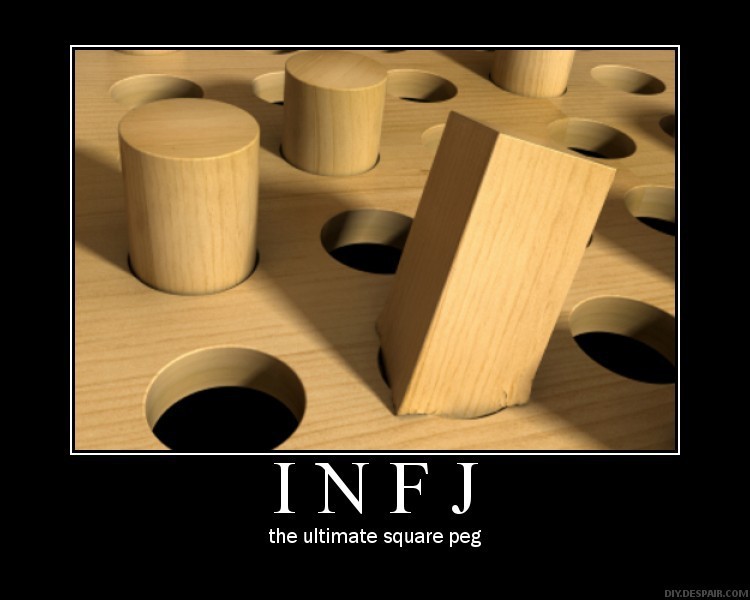
I’m sure there are misguided words people have used to describe you, too; words that you just couldn’t identify with, no matter how accurate they appeared to be. In my case, I understood—sometimes—why people would perceive me in certain ways, but I would drive myself crazy because I knew they were flat-out wrong. Growing up—and even into adulthood—there were very few people who I felt “got” me; I could count those people on one hand. That’s not to say I was loved by only a handful of people. I know plenty of people who genuinely love and care about me. But being loved and being understood can be two different things. By the time I was in college, I just accepted that I was different without knowing or even asking myself why. What I often did ask myself, though, was why I couldn’t be more like someone else. I saw so many of the qualities that made me different—qualities that were either misinterpreted or deemed as inferior by others—and tried to hide them, frustrated with myself, because it was like forcing a square peg into a round hole.


And then, I discovered the MBTI: the Myers-Briggs Type Indicator.

The Myers-Briggs Type Indicator takes C.G. Jung’s psychological theories and puts them into an applicable form by implementing them into sixteen different personality types.

Ask my friends. I’m obsessed with the MBTI. OBSESSED, which is actually symptomatic of my personality type (INFJ). Discovering my “type” changed my life. As an author, it’s been invaluable in helping me better develop my characters. As a person, I’ve found it’s helped enrich my relationships. Heck, it’s helped me understand strangers. It also explained why I’ve felt so misunderstood through the years.

Let me explain to you why you NEED to know your own personality type, and why it would be beneficial to become familiar with all the other types as well.

WHY IT MAKES YOU A BETTER PARENT:

Every child has their quirks and their strengths. As a parent, I’ve already acknowledged both of these things in my daughter, but the MBTI has helped me understand why she feels the need to do things a certain way. The why is very important. I see that she is not necessarily shy, she’s introverted (I). She is very observant and has to grow accustomed to people and her surroundings before taking any kind of action (N). She generally is very concerned and aware of how other people feel and how they might perceive her (F). And lastly, she seems to make the connection between cause and effect—her actions and the possible resulting consequences (J). So, though I’m not an expert, I believe as of right now, she’s an INFJ, but she is still little enough to where this could very well change in the future. For now, though, since we share the same personality type, I have a little more insight into her personality than I might otherwise. My husband, being an INFx himself, also understands her why. xNxx (intuitive) Children raised by xSxx (sensory) parents (and vice versa) often grow up feeling misunderstood or unappreciated, because both process thoughts differently. This is one reason why being aware of your type and your child’s type is essential; it could very well explain why you have a “good” parent and a “good” child who can never seem to get along.

Another reason it’s imperative to know your child’s personality type is because in some types, there’s a tendency to be misconstrued as a behavioral disorder (ADHD, ADD) when in fact, it’s simply who the child is; it’s how they view the world around them and how they react to it. In addition to this, by knowing your child’s personality type, you will find it easier to pinpoint why they may struggle in certain areas. This will enable you to address those problematic areas specifically, allowing your child to flourish as they learn and live.

WHY IT MAKES YOU A BETTER SPOUSE:

I often tell people that I’m an ounce of prevention and my husband is a pound of cure. That is how we both subconsciously make decisions and view the future. I’m the one who is thinking ahead and seeing every possible disaster, while my husband generally deals with disaster as it comes. For many years, I saw this as a character flaw (as he did mine) and we both struggled with understanding why the other planned too far ahead or didn’t plan ahead at all. Discovering his personality type helped me to not only understand his thought processes, but to embrace them. It helped me to see that it was more than “that’s just the way he is” but to understand why. As a result, I have much more patience for this aspect of his personality than I did before.

I also no longer take the stance of “I’m right for thinking ahead when you didn’t.” Though I still believe one should consider consequences to either action or inaction, sometimes in certain scenarios, this overwhelms me to the point where I get extremely stressed out and high-strung, anticipating how everything could go wrong. That’s when my husband will hit the pause button on the situation and say, “Why are you freaking out? It’s okay. We have the whole day for this. There’s no deadline. We’re good.”

I’m very fortunate in that my hubby and I almost have the same personality type (INFJ/INFP). We’ve always gotten along extremely well with very few hitches. This may be different for married types who are almost or completely different, but knowing what your types are can help you adapt and appreciate each other more.

WHY IT MAKES YOU A BETTER CO-WORKER AND EMPLOYEE:

Jane is controlling and bossy. Laura is never in a hurry and not very assertive. Both get their jobs done, but both get frustrated with the other’s methods. Sound familiar?

Jane is most likely an xSTx personality type; Laura is probably an xNFx type. Neither of them are wrong, they’re just different. Being familiar with the MBTI can help you recognize traits in certain types and value or understand your coworkers and friends better. Jane appears controlling because she sees a problem that needs to be fixed and instinctively pursues the most efficient way to solve it. Laura is unhurried because she is thorough and wants to ensure that her job is done correctly. Being able to acknowledge the differences in perspective could potentially diffuse confrontational circumstances and empower you to see the complementing strengths in your counterparts. Someone with an xxFx type is likely a better people person, while someone with a xxTx type is likely a better problem solver.

In an intense situation, Laura is probably more likely to show empathy/sympathy and make the other person feel heard and understood, while Jane is more likely to present a solid plan to resolve the issue. Both are “right” because both are necessary.

WHY IT MAKES YOU A BETTER PERSON:

If all of the above isn’t enough to convince you of why you should learn your personality type, allow me to make one last hurrah. One of the most profound changes I experienced upon discovering my personality type—and perhaps the most important—was self-acceptance. I no longer look at some of my less-celebrated qualities and think with a sigh, “That’s just the way I am.” Learning my type has allowed me to embrace both the strengths and weaknesses of my personality. It’s given me confidence in my specific abilities, while allowing me to acknowledge my growth areas with humility. Learning about my personality type has definitely made me a happier, more empathetic person.

Take note, though. The MBTI is not to be rigidly adhered to. Though you may find similarities in people who share your personality type, we all grow up in different households with different environments, experiences, and values. Having a general—if not thorough—knowledge of the MBTI types can be indispensable, but it should definitely not be used to reproach someone for behaving or thinking outside the boundaries of their personality type. It’s also important to note that people with mental illnesses may not appear to belong to any one specific category.

Again, I urge you to take the test and discover your personality type and what it means. It could become as invaluable to you as it has become to me, whether its discovering a career you will thrive in, improving relationships, or just plain learning to love the unique, remarkable person that you are.